

Forget incorporation papers, recruiting agencies, and cap table spreadsheets.
In the Bseech era, a venture is not a legal entity you build before you start. It is a persistent coordination pattern that emerges from a validated idea. Here is how a founder, "Jin", goes from concept to operational, global company in 24 hours, using only the platform.
Phase 1: Intent Casting & The Genesis Brief (Hour 0-1)
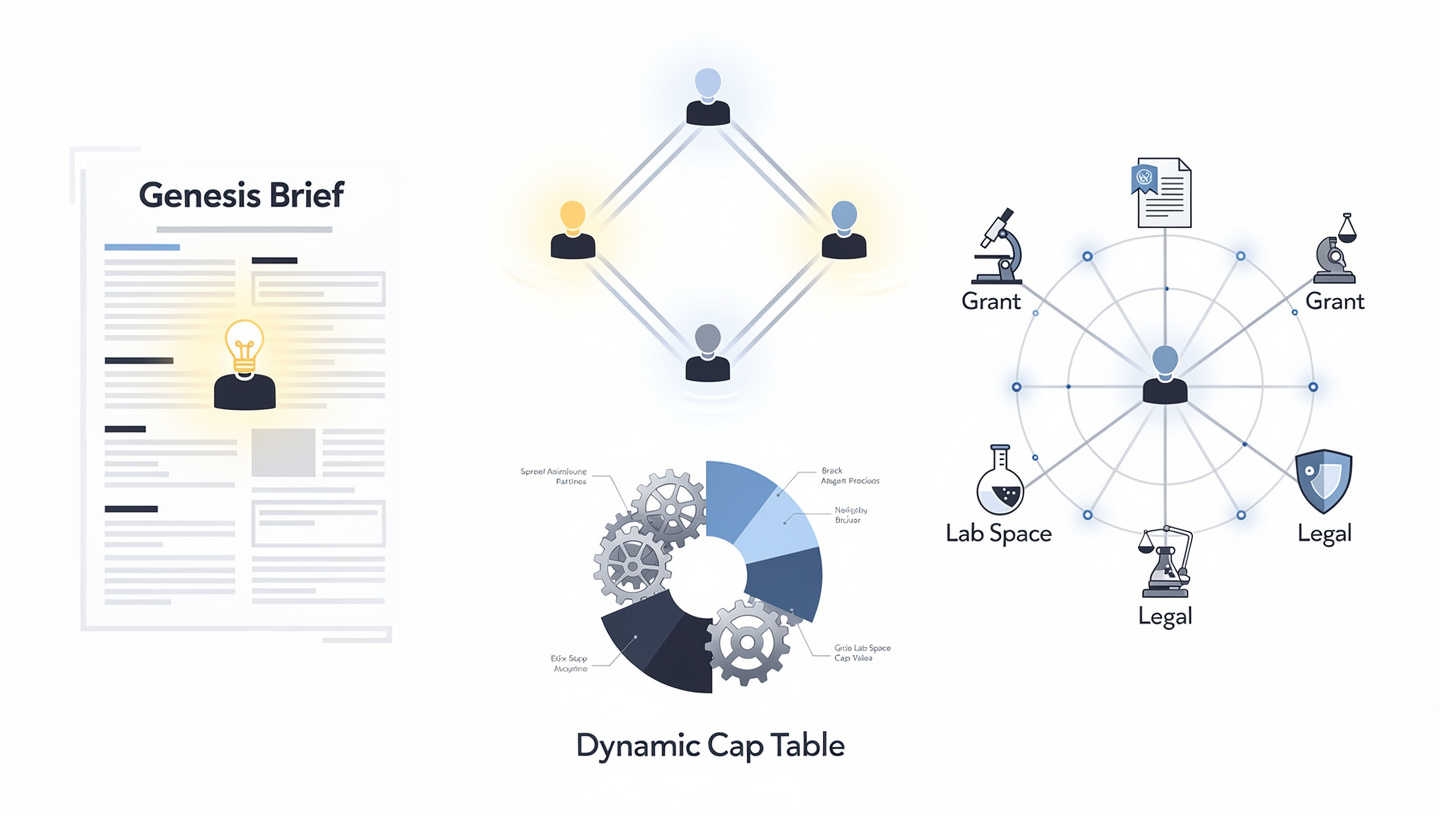
Jin doesn't write a business plan. He authors a Genesis Brief using the platform's structured intent language. "Build a direct-air-capture device using biomimetic principles, targeting casts this brief. He doesn't send it to investors, he posts it to the capability graph as a verified opportunity. The platform's algorithms immediately begin parsing it for capability vectors: biomimicry, chemical engineering, carbon accounting, hardware prototyping, project governance.
Phase 2: Dynamic Capability Assembly & The Founding Archipelago (Hour 1-6)
Within minutes, the system suggests a Founding Archipelago. It's not a list of candidates. It's a proposed team structure:
- Core Node A: "Elara" - A biomimicry scientist in California with a 98 Trust Score in the domain and 20% open retainer capacity.
- Core Node B: "Kaito" - A Japanese hardware prototyping expert with verifiable experience taking deep-tech to pilot.
- Core Node C: "Samira" - A Berlin-based climate finance strategist.
- Crucially, it also shows the predicted trust compatibility between these three strangers, based on their collaborative histories and communication styles. Jin reviews their Unified Selves rich with past project logs and peer attestations, and with one click, sends a Form Founding Archipelago proposal, with embedded smart contracts for an initial 2-week discovery sprint.
Phase 3: Smart Equity & The Instant Cap Table (Hour 6-12)
The platform doesn't use archaic equity splits. It uses Dynamic Contribution Tokens (DCTs). The proposal Jin sends outlines a token pool: 10,000 DCTs for the venture. The initial allocation is suggested by the platform based on role criticality and estimated time commitment, but is negotiable within the chat. Jin offers Elara 1,500 DCTs for a 15-hour/week retainer commitment for the first quarter. She counter-offers. All agreements are recorded as smart contracts on the venture's native cap table, visible and auditable by all members. Vesting, cliffs, and dilution rules are protocol features, not lawyer fees.
Phase 4: Resource Resonance & Auto-Piloting (Hour 12-24)
With the core archipelago formed and tokenized, the venture becomes a live node on the network. It now has its own profile. The platform's Resource Resonance engine goes to work:
- It automatically matches the venture's brief with open grant applications from climate foundations.
- It flags that Kaito's city has a hardware incubator with an application deadline in 3 days and auto-drafts a proposal using data from the team's Unified Selves.
- It finds and recommends a Retained Legal Guild specializing in climate tech IP, ready for a quick consultation.
- The venture isn't searching for resources, the resources are finding the venture, because the platform understands its verified composition and intent better than any human pitch deck ever could.
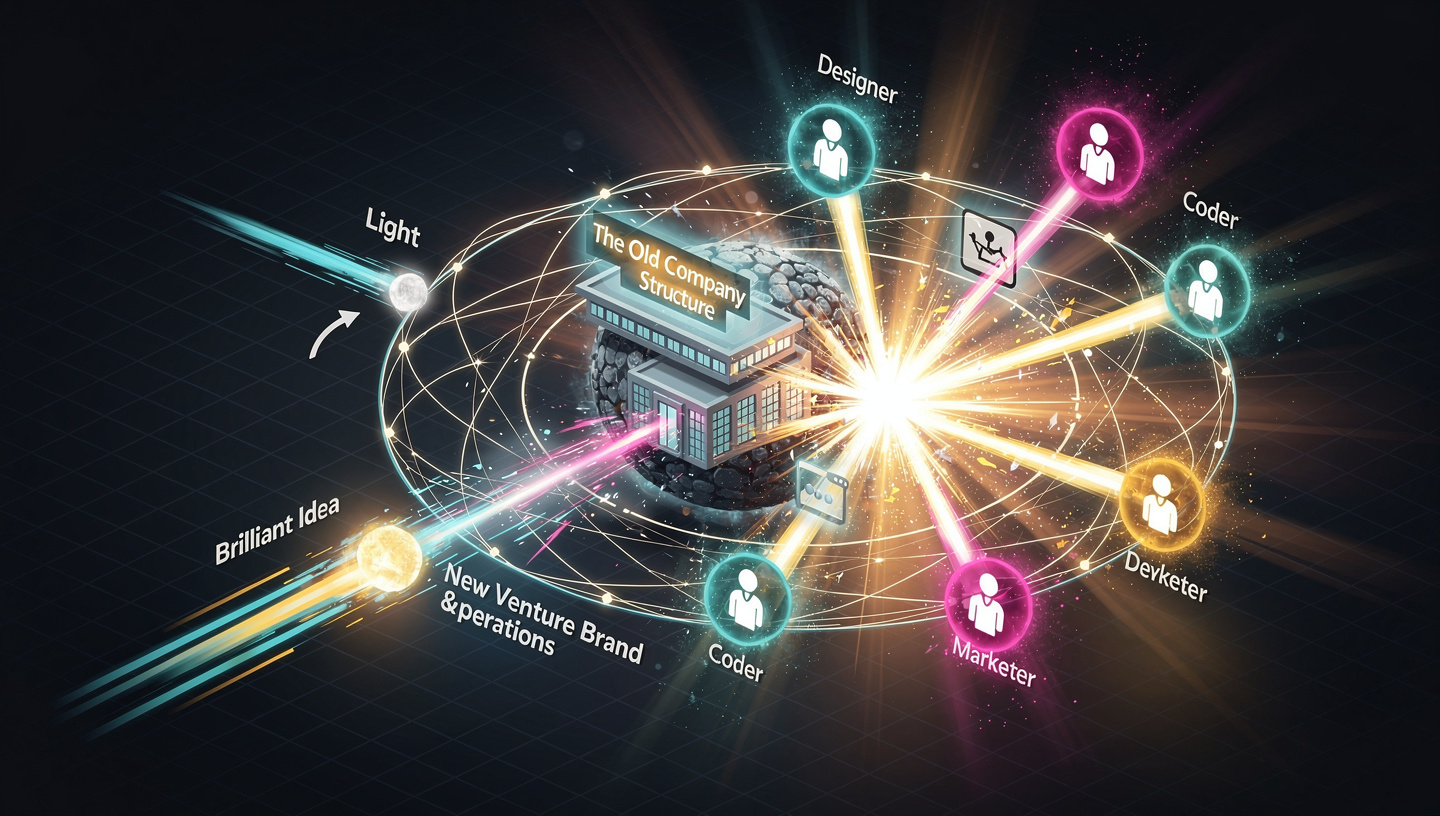
Jin's company didn't launch. It crystallized. It went from a solitary intention to a trusted, resourced, and operational multi-national team in a day, with governance and economics baked in. The friction of inception has been reduced to nearly zero. Now, the real work - the creative human work of building can begin with all its energy intact.



Be the first to leave a comment.