

We've been asking the wrong question for decades. Not "how do we create jobs?" but "why do jobs exist in their current form?"
The 9-to-5 job is a historical accident - a bundle of tasks, location requirements, and time commitments that made sense in an industrial age but has become increasingly absurd in a digital one. Uber unbundled transportation. Airbnb unbundled accommodation. Bseech unbundles human capability itself.
The Micro-Action Economy isn't coming - it's already here, just fragmented.
Consider this: The average person possesses 7-10 marketable skills, but their job utilizes 2-3. The other 5-7 skills atrophy or get expressed as unpaid favors. The single greatest economic waste isn't unemployment - it's underutilization.
Our platform reveals something radical: when you can match any human capability to any human need in real-time, the very concept of "unemployed" becomes meaningless. Someone might be between traditional jobs but coordinating three micro-services: teaching Spanish to a student in Toronto at 8 AM, consulting on a neighborhood garden project at 11 AM, and proofreading a research paper at 3 PM.
But this isn't just gig work 2.0 That's the crucial misunderstanding.
Gig platforms sell tasks. We're creating capability networks. The difference is profound:
- Skill Stacking: A retired engineer in Nairobi with gardening expertise and local knowledge can offer "engineering review + garden design + Nairobi logistics" as a single service to a developer building a local tech hub.
- Cross-Border Value Arbitrage: Physical skills remain local while digital skills become global. Someone's "ordinary" local skill in one market becomes "expertise" in another.
- Trust Portability: A 5-star rating for babysitting transfers partial trust to pet-sitting, then to house-sitting, creating acceleration in new service adoption.
The psychological shift is more important than the economic one.
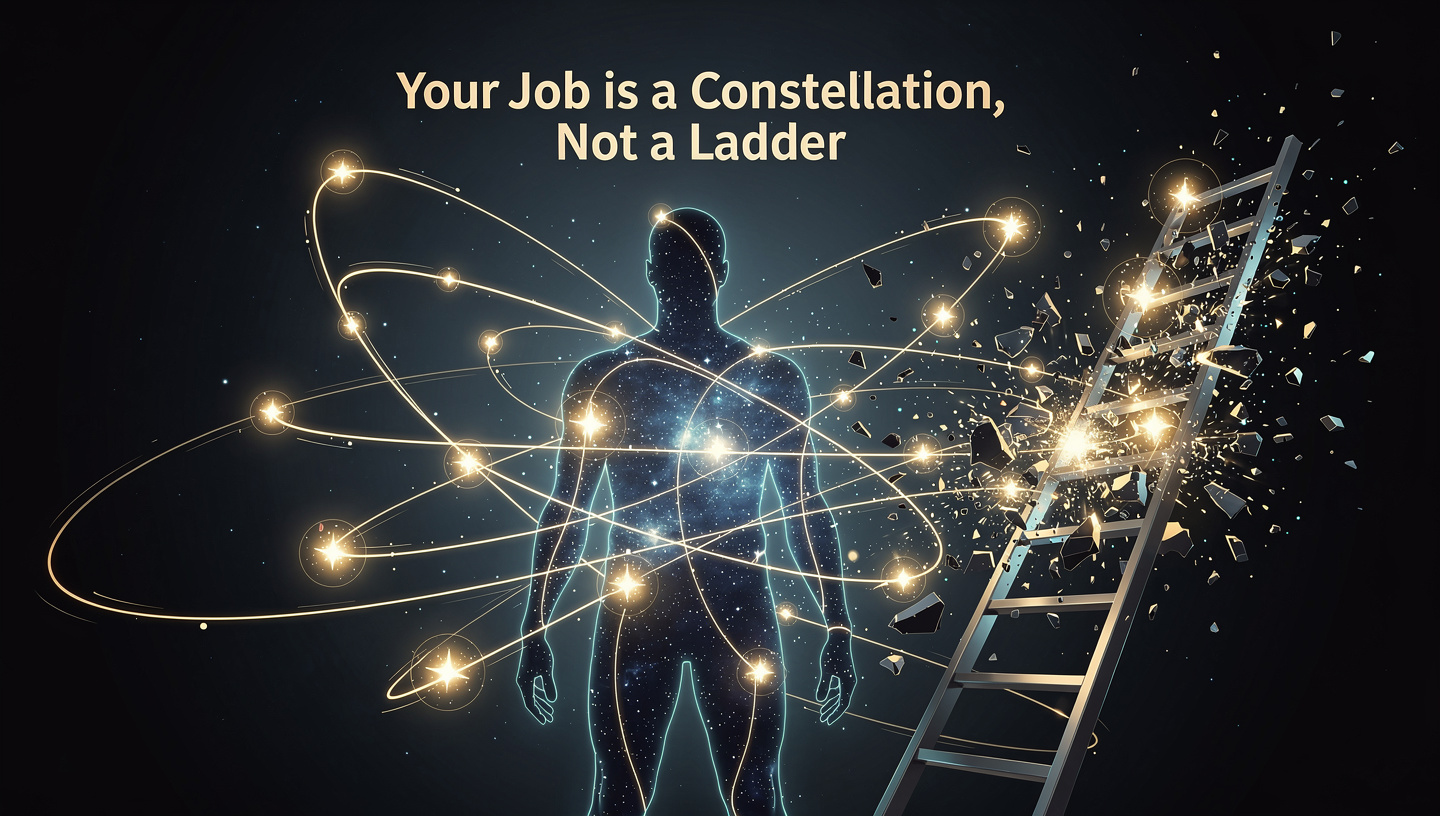
When people see their capabilities as a portfolio rather than a single job title, something changes. They stop thinking "I need a job" and start thinking "which of my skills is most valuable right now?" This creates resilience against automation, economic shifts, and geographic limitations.
Our data shows something extraordinary:
The most successful users aren't those with the rarest skills, but those with the most creatively combined ordinary skills. The magic happens in the intersections
The 23-year-old who combines social media savvy with elderly care knowledge creates "digital companionship for seniors." The mechanic who learns basic accounting offers "auto shop financial health checks." These combinations don't exist as jobs - they emerge as needs arise.
The counterintuitive truth:
The future of work isn't more specialization. It's more combination. It's not doing one thing better than machines, but doing three things together that machines can't coordinate.
This requires a new kind of platform - one that doesn't just match tasks, but understands capability intersections. One that doesn't hide behind algorithms but reveals when human judgment is needed. One that celebrates the "failure" of matching because that's where new human combinations are discovered.
The unemployment rate will become as obsolete as the typewriter. The new metrics will be:
- Capability utilization rate
- Skill combination velocity
- Trust transfer efficiency
- Cross-border value flow
We're not creating jobs. We're making the concept irrelevant. When every human capability can find expression and compensation in real-time, what we call "employment" today will look like a primitive, inefficient bundling of what should be fluid, dynamic, and deeply human.
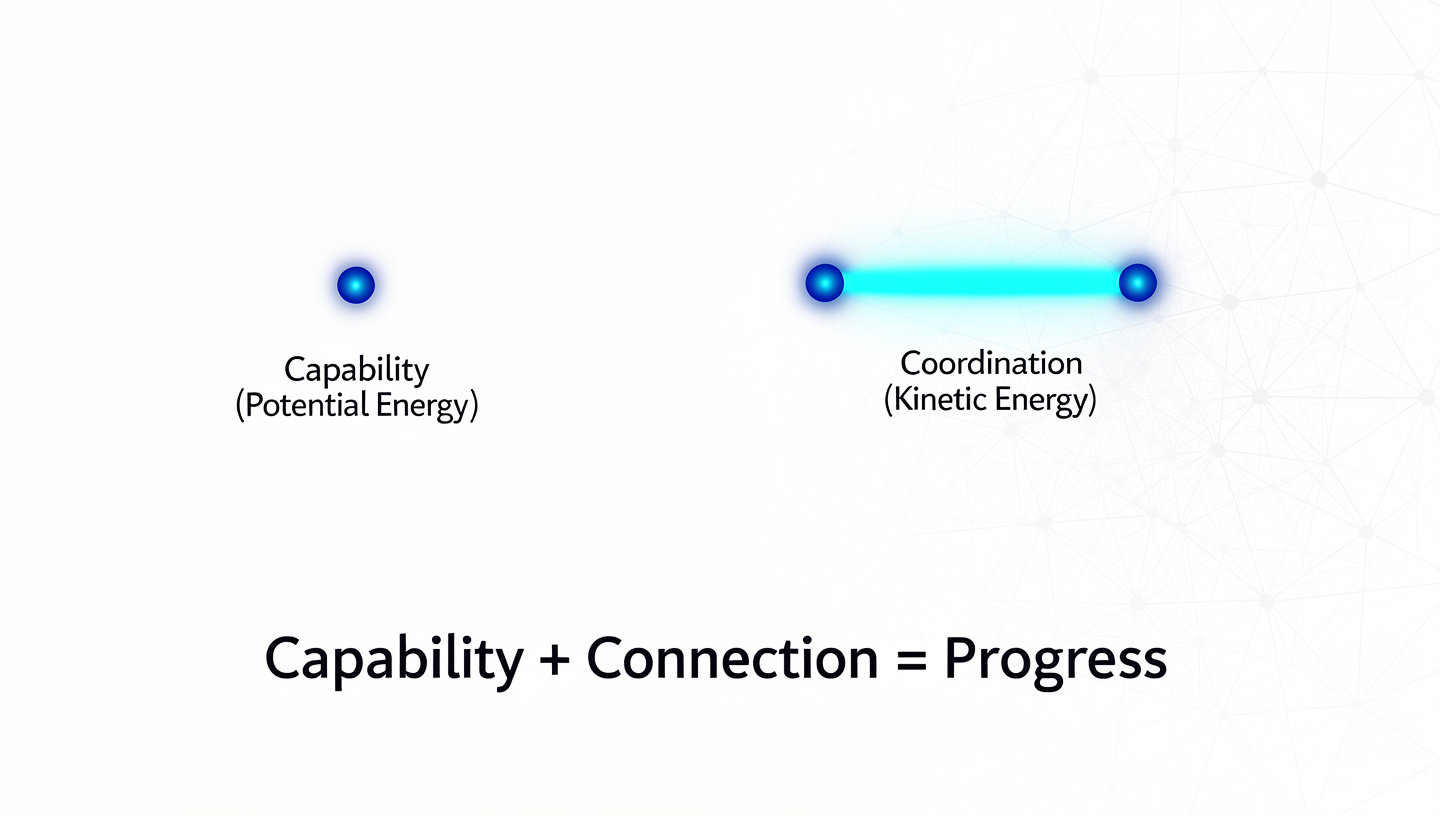
The revolution isn't in creating more work. It's in recognizing that we've always had enough capability. We just lacked the coordination layer to activate it. That layer now exists, and with it comes the end of unemployment as we've known it for two centuries.



Great piece here Bseech, wow, can't wait!
Thought that too.
Good read, well March is around the corner.
Well, the game has begun...