

We have engineered the protocols, the markets, the governance. But the final and most resistant frontier is the human mind itself.
To thrive in the Bseech ecosystem, individuals must undergo a deep psychological rewiring. They must abandon inherited scripts about careers, success, and self-worth that are baked into the industrial and gig economies. This is the shift from being a worker or a hustler to becoming an Orchestrator, a shift that changes how you perceive desire, interpret failure, and construct your very identity.
Desire: From Ambition to Curious Intent
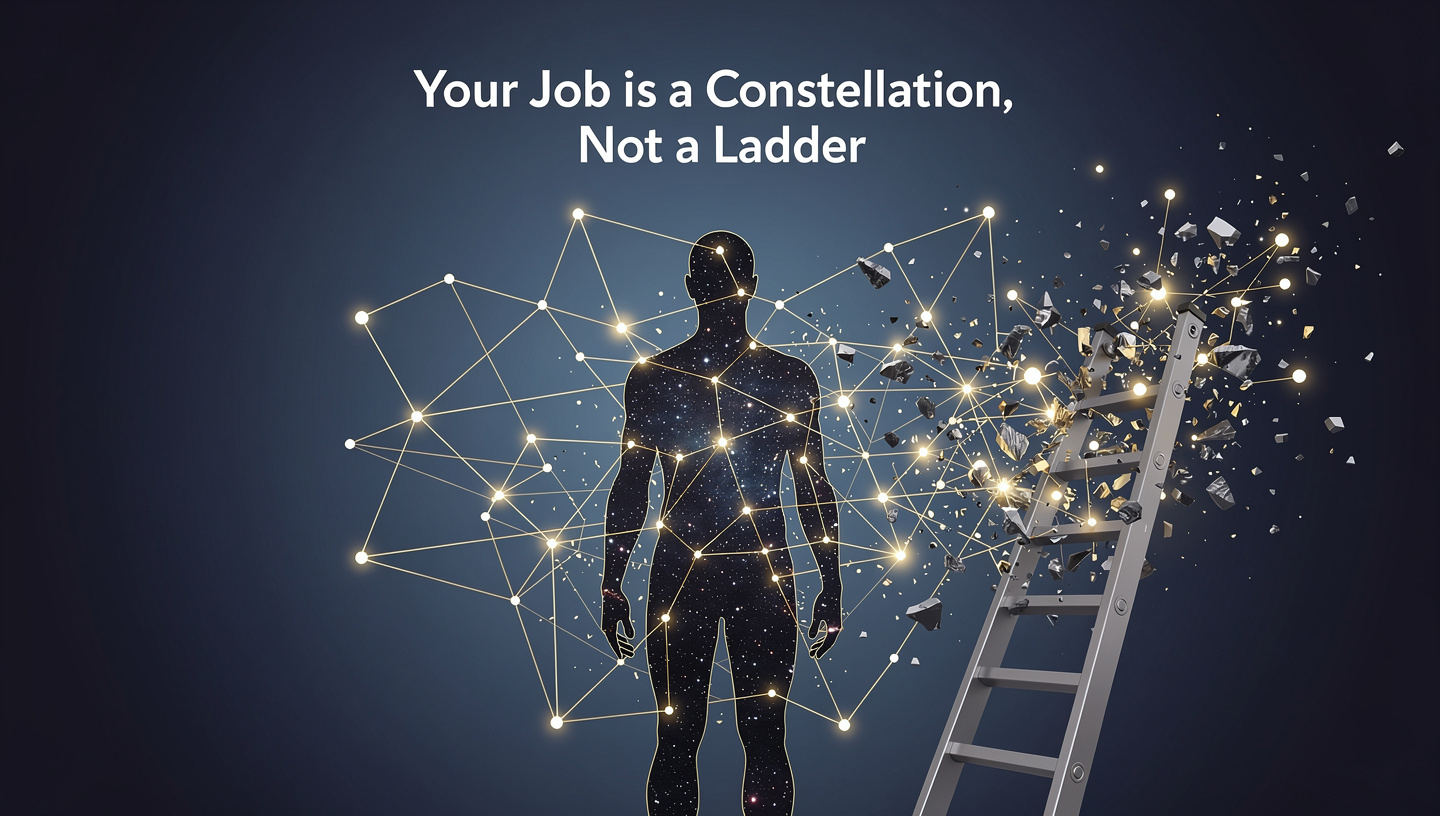
Industrial ambition is linear and possessive: "I want that job, that title, that corner office." It is a craving for static status symbols. Orchestrator desire is fluid and curious: "I want to see what happens when my skills in biomimicry are combined with a master storyteller and a regenerative farmer on that land restoration project." Desire is not for a possession, but for a participation in a novel creation. The platform's "Intent Engine" doesn't fulfill a pre-formed wish list, it acts as a mirror and a matchmaker for this curious intent, showing you possibilities for combination you hadn't imagined. Your ambition is no longer to climb a ladder, but to weave ever more interesting and impactful patterns in the network's fabric.
Failure: From Stain to Signal
In a job, failure is a career stain, a missed promotion, a terminated contract. It is personal and punitive. For the Orchestrator, failure is a high-fidelity signal. The structured autopsy of a failed project is not a verdict on you, but a rich dataset on a specific coordination pattern that did not work. A failure stored in your Shadow Profile is not a secret shame; it is a learning asset, a piece of the network's collective immune memory. The psychological shift is from "I am a failure" to "I (with my collaborators) have successfully located a boundary of what works." This transforms the emotional valence of risk from terror to necessary exploration.

The Self: From Noun to Verb
The industrial self is a noun: "I am a Project Manager." It's a fixed category. The gig-economy self is a list of nouns: "I am a Driver, a Handyman, a Writer." The Orchestrator's self is a verb, defined by active patterning: "I am the activity of connecting biotechnology with ethical frameworks." Your Unified Self is not a static resume, but a visualization of your capability-in-motion. You are not what you are, you are what you do, and more importantly, what you cause to happen through the connections you make. This verb-self is liberating and demanding, it requires you to continually engage, to choose your next action consciously, as it actively defines who you are in real-time.
Flow: From Task to Conduction
The pinnacle of this psychology is a new form of flow. Mihaly Csikszentmihalyi's classic flow occurs in an individual deeply immersed in a task. The Orchestrator's flow is conduction flow. It is the euphoric state of being a perfect conductor for value through the network. It's the feeling when your intuitive nudge connects two providers who create magic, when you sense a need in the ecosystem and instantly assemble the perfect Archipelago to meet it, when your Trust Graph pulses with healthy, reciprocal energy. The joy comes not from personal mastery of a skill, but from the masterful facilitation of collective mastery.
The Digital Shaman as Psychological Guide
This rewiring is not automatic. The platform's own efficiency can exacerbate old neuroses (obsessive reputation checking, fear of a missed connection). Therefore, the Digital Shaman's most subtle role is as a Psychological Guide. They help users interpret their own data not as a scorecard, but as a biography of their evolving verb-self. They counsel the user paralyzed by infinite choice, helping them frame desire as curiosity. They reframe failures as signals. They are the therapists for the new economy, helping minds adapt to the freedom and responsibility they have been granted.
Bseech, therefore, is not just an economic platform. It is a machine for manufacturing a new state of mind. We are building the external structures that, if used wisely, will coax forth a more adaptive, resilient, and collaborative human psychology. The final product of all our coordination technology is not just solved problems, but a new kind of human: the Orchestrator, at home in complexity, fearless in the face of fluidity, and fulfilled by the act of connection itself.



Be the first to leave a comment.