

We romanticize innovation as a flash of genius, a greenfield invention. More often, it's the systematic elimination of a maddening little gap.
The gap between what is technically possible and what is practically feasible. At Bseech, we innovate by obsessively measuring and closing one specific gap: the Coordination Gap.
The Anatomy of a Feasibility Gap:
It is possible for a retired engineer in Nairobi to advise a startup in Norway. The technology exists. Yet, it is not feasible. Why? The Feasibility Friction includes: discovery cost (How do they find each other?), trust validation (How does the startup trust the advice?), payment logistics (How is money exchanged across borders?), and legal ambiguity (Whose jurisdiction governs this?). Innovation, for us, is the engineering project of reducing this friction to near-zero.
The Viability Threshold:
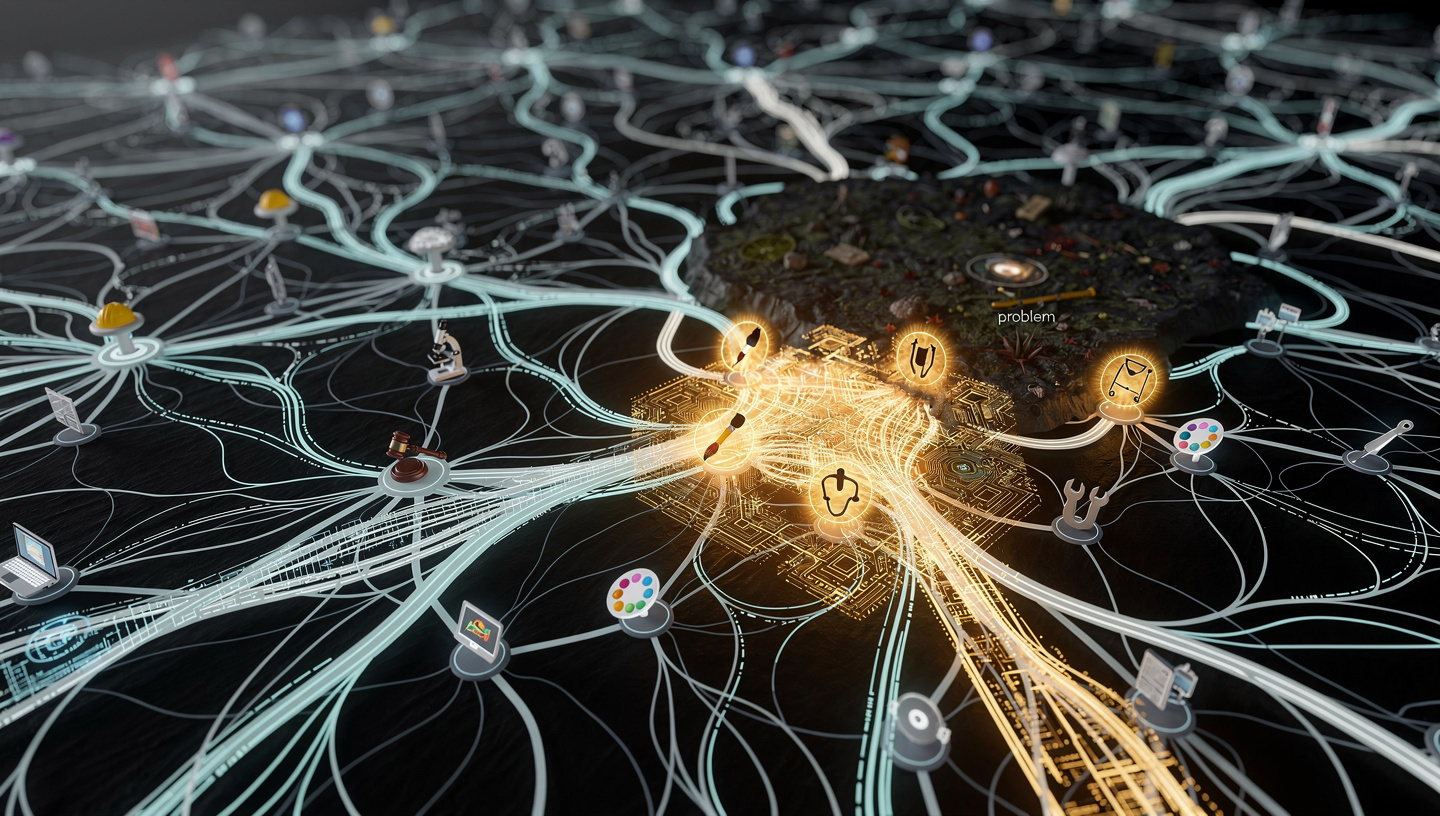
Every human need has a Viability Threshold, the level of coordination friction below which seeking a solution becomes worth the effort. Our platform's innovation function is to lower that threshold for entire categories of activity. Pre-platform, organizing a cross-border tour had insurmountable friction (high threshold). Post our "Human Archipelagos" innovation, the friction is managed and predictable (low threshold). We didn't invent tours, we made a category of them viable.
Our Innovation Loop:
- Detect the Grunt: We instrument our platform to find user 'grunts', the sighs, the workarounds, the abandoned requests. These are signals of high-friction gaps.
- Isolate the Variable: Is the gap in discovery? Trust transfer? Multi-party agreement? We deconstruct the friction into its component parts.
- Prototype a Bridge: We design a minimal mechanism, a new trust protocol, a templated multi-party contract, a reputation proxy to bridge that specific gap.
- Measure Gap Closure: Did the viability threshold for that activity drop? Did the volume of successful matches increase?
Case Study: The 'Trust Proxy' Innovation:
The gap: A user needs a house-sitter they can implicitly trust. Our existing rating system isn't enough. The innovation: The Trust Proxy. Users can designate a "Trust Anchor", a real-world friend already on the platform. The Anchor's reputation casts a "shadow of trust" on the new user, lowering the threshold for their first booking. We didn't invent trust, we created a transfer mechanism that closed the "initial trust" gap.
Innovating at the Meta-Level: Coordination Science:
Our most profound innovation is turning innovation itself into a science. Coordination Science provides the metrics (Coordination Waste, Viability Threshold, Network Resilience) that tell us where the most valuable gaps are and whether our bridges are working. This moves innovation from the realm of gut feeling to the realm of measurable engineering.
The Cultural Principle: Celebrate the Bridge-Builder:
We don't reserve the title "innovator" for the AI researcher. The Digital Shaman who devises a new protocol to mediate a cross-cultural dispute is an innovator. The community that votes into existence a new standard for childcare providers is innovating. Our role is to provide the tools, the APIs, the governance frameworks, the data that allow our entire community to participate in the work of gap closure.
True innovation isn't always about the shining new thing. It's about the silent disappearance of a barrier that was holding back a million possible things.
We are in the business of making the possible, feasible. And in that seemingly humble pursuit, we are unlocking a renaissance of human collaboration.


Be the first to leave a comment.