

The leader of the future has no office, no direct reports, and no org chart.
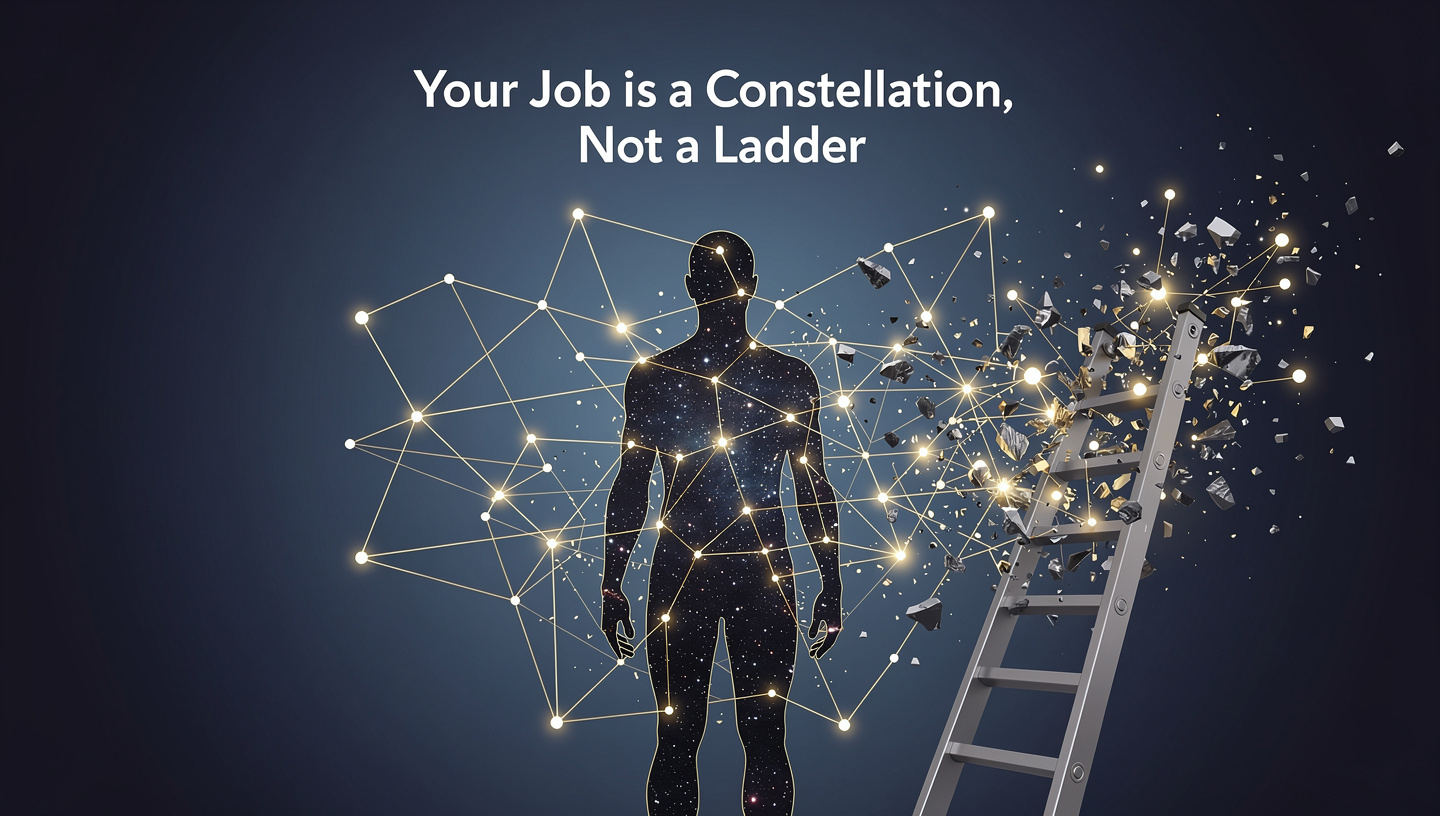
Their team is a constellation of sovereign professionals, assembled for a purpose and likely to disperse for another. Command-and-control is not just impossible, it's offensive. This requires a new discipline: Distributed Authority. This is the art of creating alignment, momentum, and coherence not through hierarchy, but through context, trust, and perfectly designed information flow. The leader is no longer the captain of the ship, but the designer of the tide and the wind that guides a fleet of independent vessels.
From Vision-Casting to Context-Weaving
A traditional leader casts a vision. A leader practicing Distributed Authority weaves a rich, shared context. They use the platform not to give orders, but to construct the information environment in which brilliant individuals will make the right decisions autonomously. They ensure every member of the constellation has real-time access to the same critical data: user feedback, system metrics, resource constraints. They use the Digital Shaman protocols to facilitate "context alignment" sessions, not planning meetings. The goal is that any node, acting on its own expertise within this shared context, moves the whole constellation in the desired direction.
The Trust Radar and Predictive Intervention
Their primary tool is the Trust Radar, a leader-specific dashboard of the constellation's social and productive health. It doesn't track hours, it visualizes trust flows, communication density, and blockages. It can predict where misalignment might occur between two high-skill nodes with clashing communication styles. The leader's role is to intervene predictively and minimally. They might simply introduce a clarifying protocol or connect a stuck node with a historical case study from the platform's memory. Their authority is expressed through curation and connection, not command.

Leading by Modeling Vulnerability in a Verifiable World
In a network where every outcome is attached to a verifiable Unified Self, strategic vulnerability becomes the ultimate leadership currency. A leader must be the first to depersonalize failure, posting the "structured autopsy" of a missed milestone and focusing the team on the systemic lesson. They must visibly engage with feedback on their own leadership "vectors" (decisiveness, clarity, empathy) shown on their profile. In a transparent system, perfection is suspicious, but rigorous learning is inspiring. By modeling how to be wrong correctly, they give the entire constellation permission to take bold risks and learn fast.
The Rituals of Formation and Dissolution
A temporary constellation has a life cycle, and the leader is the ritual keeper. They design the lightweight rituals that mark its phases:
- The Launch Pact: A collaborative session using platform tools to define not just what will be done, but how the group will work together.
- The Momentum Pulse: Brief, automated check-ins that are less about status and more about sensing energy and friction.
- The Completion Ceremony: A mandated moment to reflect, archive the "Legacy" document, and publicly exchange verified attestations. This ritual closes the trust loop, ensuring every member leaves stronger than they arrived, their reputation enriched.
- The leader's power is in giving meaningful shape to the group's finite existence.
Cultivating Leadership in Every Node
The final goal of Distributed Authority is its own obsolescence within that constellation. The leader actively identifies and amplifies leadership moments in others. They use the platform to give visibility to the node who resolved a conflict or proposed a novel solution. They design the system so that authority naturally flows to competence and context, not title. By the project's end, multiple members should have exercised leadership in their domain, their Unified Selves permanently stamped with that experience. The leader hasn't led a team, they have curated an environment where a team led itself.



Be the first to leave a comment.