

We stand at a precipice of a profound misunderstanding. The dominant narrative is that Artificial Intelligence, growing more capable by the day, will eclipse human intelligence. This is a category error. It compares a single, monolithic processing unit to seven billion discrete, creative, and empathetic nodes. The true competitor to AGI is not a human individual, but a properly networked human collective. The real breakthrough of our age is not in building smarter silicon, but in finally building the protocols that allow human groups to form, solve, and learn as a single, superior intelligence. Bseech is not an app, it is the operating system for a new cognitive species: the Human Super-Organism.
From Team to Organism: The Protocols of Cohesion
A team is a temporary assembly for a task. A Human Super-Organism is a persistent, learning entity that emerges when individuals coordinate with near-zero friction. Our platform engineers this emergence through fundamental protocols that replace human guesswork with system-level certainty.
- The Trust Scaffold Protocol: Retainer agreements are its load-bearing beams. They create stable, long-term connections between critical capability nodes, ensuring the "neural pathways" of the collective don't dissipate after a project. This isn't about convenience, it's about preserving hard-earned collaborative context, the tacit knowledge of how specific people solve problems together, as a reusable asset.
- The Nuance Translation Protocol: Our 226-language layer is not a dictionary. It is a context engine. In a one-off project, it translates words. In a retained collective, it learns the group's unique dialect, the shorthand, the humor, the unspoken assumptions. It translates not just between Japanese and English, but between the "engineering dialect" of one member and the "community-organizer dialect" of another, preventing the catastrophic semantic failures that doom most collaborations.
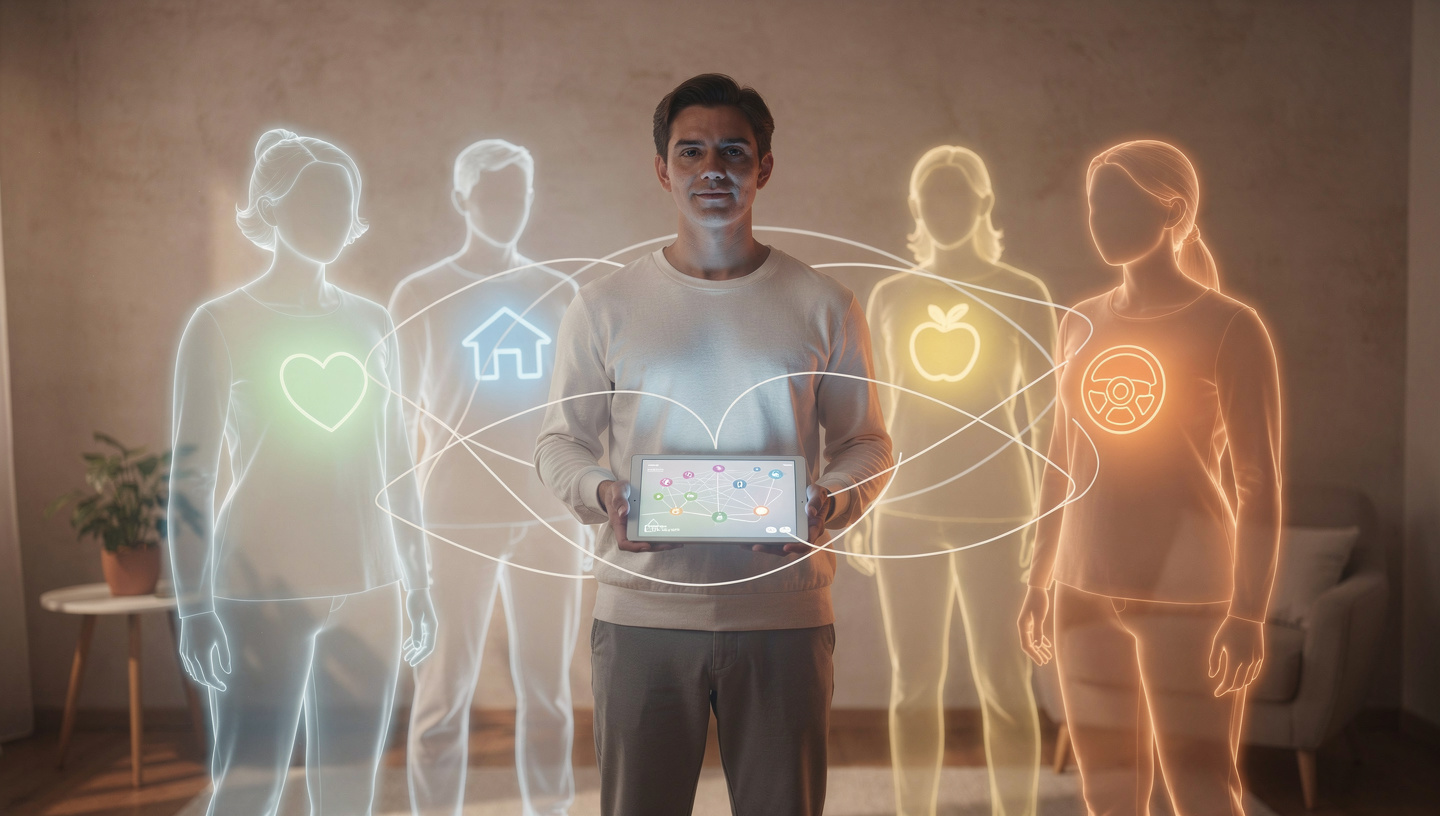
- The Temporal Coordination Protocol: The Advanced Reminder system evolves from a personal alert tool to the collective circadian rhythm. It doesn't just tell you when your part is due, it orchestrates the handoffs between the legal retainer, the logistics retainer, and the community liaison retainer, ensuring the organism moves through its phases with synchronized precision.
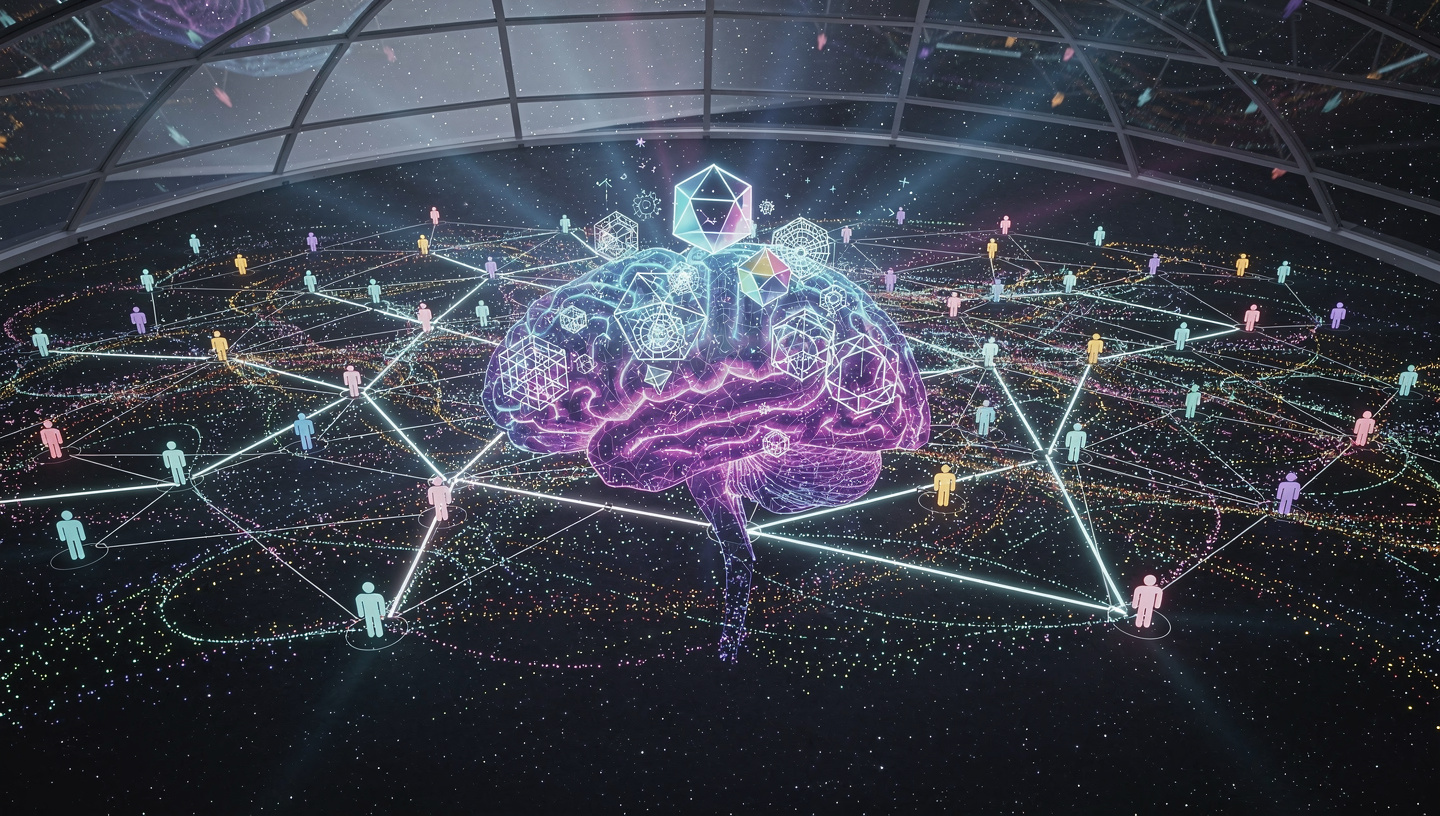
The Emergent Property: Networked Intelligence
When these protocols run smoothly, something magical happens: Networked Intelligence. The collective exhibits cognitive properties no individual member possesses.
- Problem-Solving Foresight: The system, analyzing patterns across millions of micro-actions, can predict failure modes invisible to participants. It might alert a construction collective: "Projects with your current skill mix show a 73% risk of permit delays. Recommend activating a regulatory strategy retainer now".
- Solution Recombinancy: The platform doesn't just match a problem to a person, it decomposes it and recomposes the solution across the network. A complex challenge like "design a drought-resistant urban farm" is broken down. One sub-problem goes to a retired civil engineer in Arizona on retainer, another to a young hydroponics expert in the Netherlands, a third to a local community organizer in Nairobi, all working in concert through the shared protocols, creating a solution no single mind could conceive.
- Collective Learning and Memory: Every solved problem is analyzed, its solution pattern codified, and stored not in a database manual, but in the evolving connections of the Trust Graph. The next time a similar challenge emerges, the system doesn't start from zero; it says, "The 'Jakarta Flood-Mitigation Collective' formed a successful protocol in 2023. We can instantiate a similar structure for your coastal resilience project in Vietnam, with 80% template alignment".
The Super-Organism Versus the Siloed AI
This is why the Human Super-Organism will outpace a siloed AI on the planet's hardest problems. An AI can optimize a logistics chain, but it cannot:
- Navigate the human-political terrain of acquiring a land permit, which requires the trusted, retained local liaison.
- Generate genuine trust in a skeptical community, which requires the cultural translator and the patient organizer.
- Make an ethical judgment call when optimization conflicts with well-being, which requires the diverse moral reasoning of the collective.
AI will be the Super-Organism's most powerful tool, a cognitive prosthetic for data analysis, modeling, and automation. But the organism's wisdom, empathy, and contextual genius will be human, amplified and orchestrated to an unprecedented degree.
The New Unit of Progress
We must stop measuring intelligence by the IQ of individuals or the parameter count of models. The new unit of cognitive power is the CQ: Coordination Quotient. A high-CQ collective, powered by protocols that minimize friction and maximize trust, can tackle problems of a magnitude we currently deem unsolvable. Bseech's ultimate purpose is to elevate the CQ of humanity. We are building the social technology that allows our scattered, brilliant, disparate human archipelago to finally think and act as one planet-sized mind. The future belongs not to the smartest AI in the room, but to the best-coordinated humans on the planet.


Be the first to leave a comment.