

The myth of the pandemic response is that it was led by nations. The reality, documented from Mumbai to Chicago, was that it was saved by neighborhoods. When centralized systems faltered, it was community-based organizations (CBOs), mutual aid networks, and trusted local leaders who delivered food, disseminated truth, and cared for the isolated. Yet these heroes operated in the shadows, under-resourced and disconnected from scale. Bseech proposes a new model: not to replace this organic civic genius, but to amplify it into a new layer of governance. We enable the rise of the Civic Architect, the community leader equipped with the tools to transform local trust into systemic resilience.
From Informal Networks to Verified Civic Graph
A community's strength is its "who knows who", This is social capital, but it's trapped in phone trees and WhatsApp groups. Bseech's platform allows a local organizer to map this Civic Trust Graph. The "grandmother who knows everyone", the retired nurse, the restaurant owner with a delivery van, the tech-savvy teen, each becomes a verified node with a Unified Self listing their community-capability: "Has van", "Speaks Cantonese and English", "Certified in CPR", "Can cook 50 meals". This isn't surveillance, it's community-sourced resilience mapping, owned by the community itself. In a crisis, the Civic Architect doesn't plead with city hall for resources, they query their own graph: "Find all verified volunteers with vehicles within 5 blocks of these 10 vulnerable seniors".
The Micro-Jurisdiction: Governing the Hyper-Local
Top-down mandates often fail because they ignore hyper-local reality. Bseech enables micro-jurisdictions digital "neighborhood pods" that can self-organize and govern. Using the platform's participatory tools, residents of a single apartment block or street can:
- Vote on and fund a hyper-local action: "Pool resources to hire a shared sanitation worker for our alley".
- Create and enforce communal norms: "Agree to a noise curfew during lockdown, with peer reminders".
- Match needs to offers seamlessly: "Ms. Chen needs groceries, Mr. Diaz can shop but needs help with online forms".
- The platform provides the lightweight governance, voting, and resource-matching infrastructure, turning a geographic community into a self-aware, self-governing cell in the larger societal body.
The Civic Architect as Platform-Savvy Leader
The new community leader is a Civic Architect. They are not just empathetic, they are platform-literate. Their toolkit includes:
- The Community Pulse Dashboard: Real-time data from permissioned community Unified Selves showing rising needs (e.g., "requests for mental health contacts up 300%").
- The Resource Bridge: The ability to formally request and receive resources from larger institutions (NGOs, city agencies) by presenting verifiable, granular data on need, rather than competing in a vague grant lottery.
- The Trust Escalator: A way to formally endorse and "credit" reliable community members, building their reputation capital within and beyond the neighborhood, turning local trust into economic opportunity.
Case in Point: The "Community Shield" During COVID-19
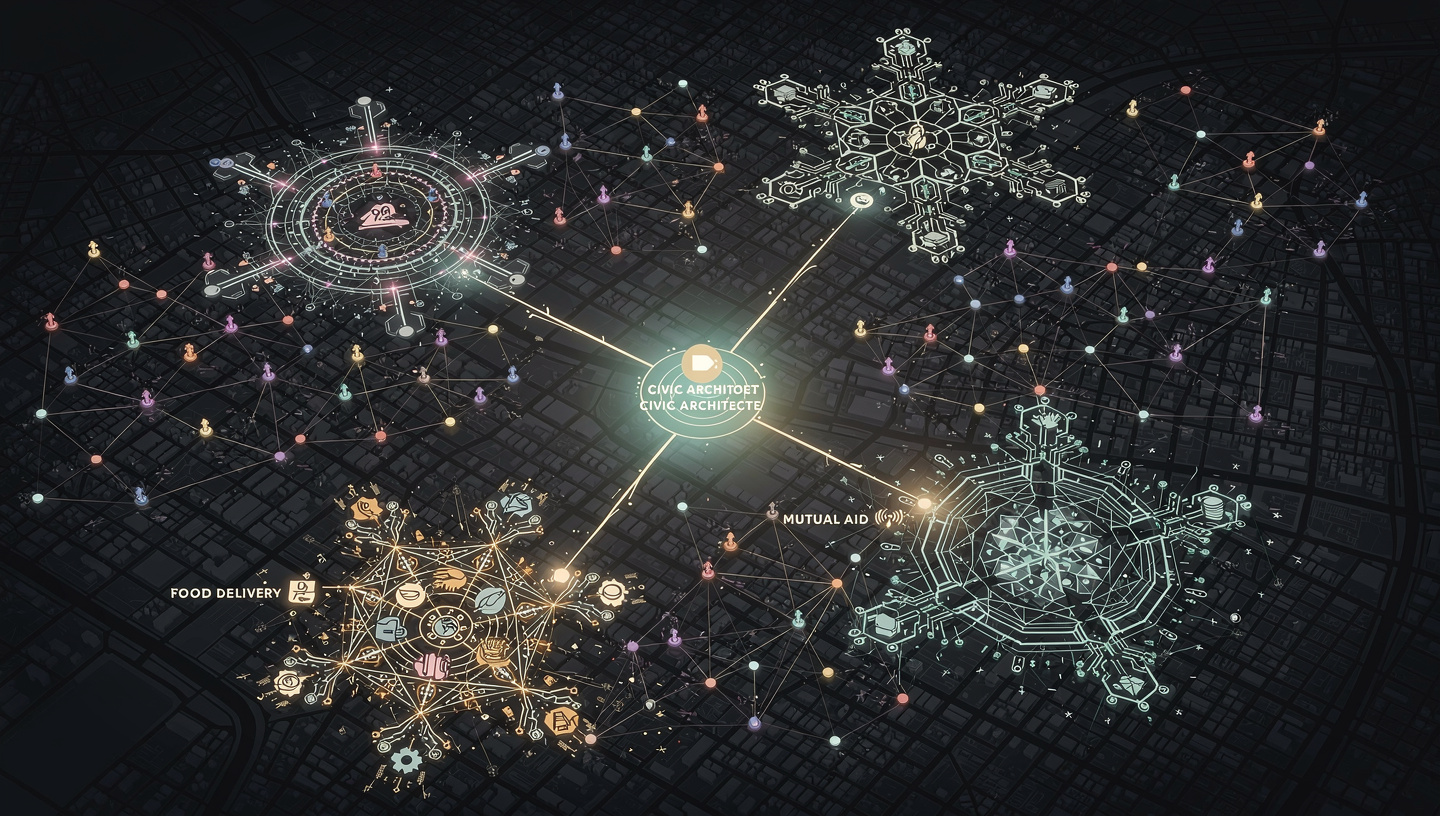
Imagine this in action during a lockdown. A Civic Architect in a district activates their verified Civic Graph. They instantly form multiple Community Care Archipelagos:
- Pod A: A network of multilingual "trusted messengers" to combat vaccine misinformation.
- Pod B: A coordinated delivery system linking restaurants (with spare capacity) to isolated seniors.
- Pod C: A peer-support network for parents, matching those struggling with remote learning with retired teachers.
- Each pod operates with autonomy but is visible to the Architect and the community, creating a transparent tapestry of care that no single agency could ever manage. This mirrors the proven efficacy of community-led responses, but provides the structure to make them sustainable, auditable, and scalable.
From Extraction to Symbiosis: Re-Writing the City-Community Contract
Today, cities often extract data from communities while providing blanket services. Bseech flips this to a symbiotic contract. The community, through its Civic Architects and platform, generates high-fidelity, real-time intelligence on its own well-being. It offers this intelligence to the city not as a helpless plea, but as a coordinated proposal for partnership: "We have mapped the need and stand ready to deploy 50 verified community health workers. Fund their retainers and provide the vaccines, we will handle the last-mile logistics and trust". The city becomes a resource node for empowered communities, not a paternalistic manager.
We are not building a platform for citizens to complain to their government. We are building the tools for citizens to become their own government's most capable, agile, and trusted partner. The future of resilience is not a stronger center, but a million intelligent, interconnected, and empowered local centers. Bseech is the loom on which this new civic fabric is woven.

Be the first to leave a comment.