

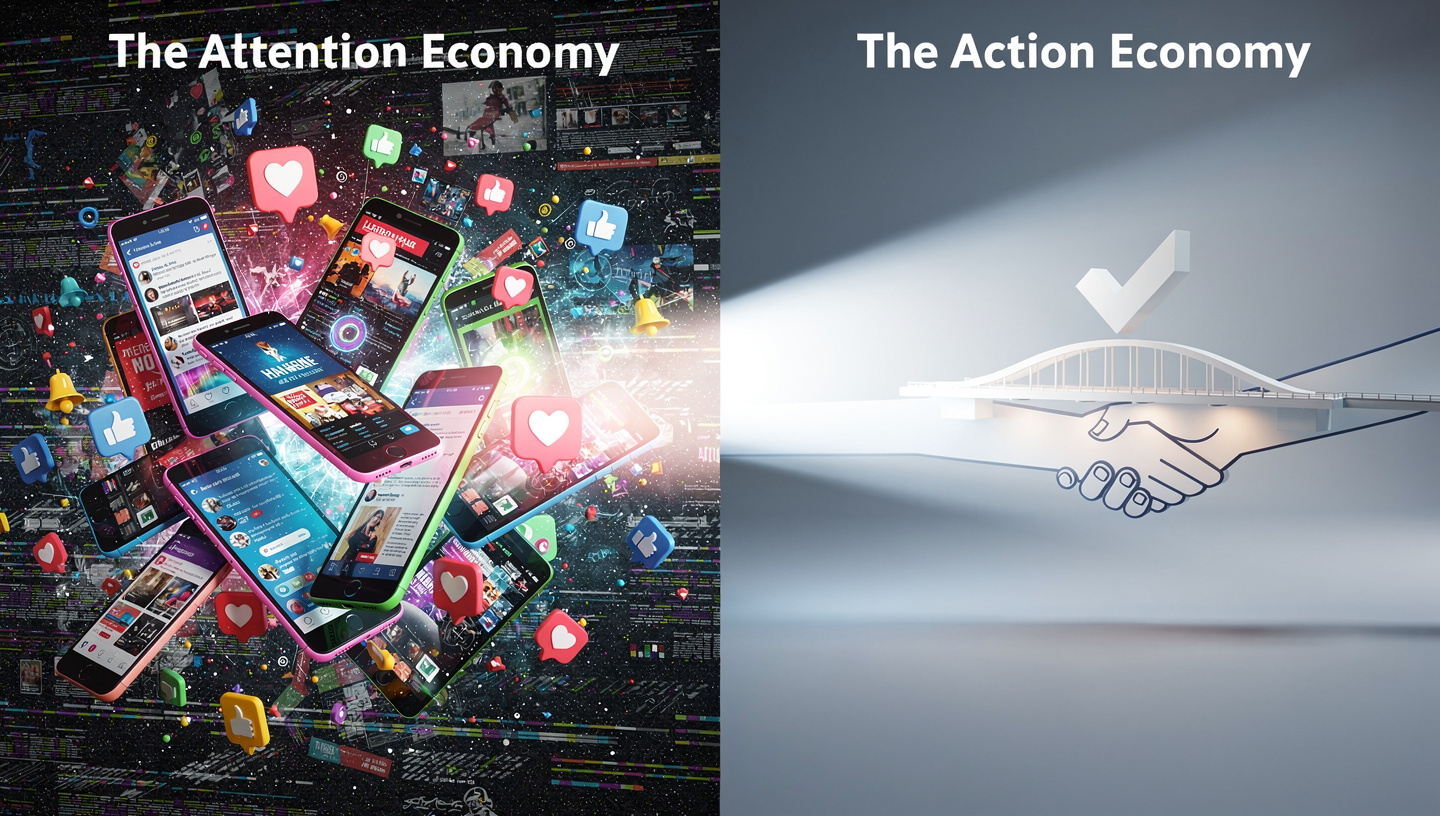
The grand narrative of our time pits human intelligence against artificial intelligence, framing a contest for supremacy. This is a fundamental misconception. The truth is that generative AI's ultimate limitation is not its intelligence, but its lack of trusted, contextual access to the real world. Large language models are brilliant, hallucinating oracles trapped in a box. They can design a perfect bridge, but they cannot convince a local community to accept it, hire the crew to build it, or navigate the permit process. AI doesn't need to be human, it needs a perfect, real-time interface to humanity. That interface is Bseech. We are not competing with AI. We are building the curation layer that will make AI cosmically useful.
From Prompts to Proxies: The Trust-Wrapped API Call
Today, a user prompts an AI: "Write a marketing plan for my new sustainable shoe." It outputs generic text. In the Bseech-integrated future, the prompt is deeper: "Execute Phase 1 of a go-to-market for my new sustainable shoe." The AI agent, acting as the user's proxy, does not just write text. It makes a series of Trust-Wrapped API calls to the Bseech platform.
- It queries the Trust Graph for the top 3 "Sustainable Fashion Marketers" with open retainer capacity.
- It analyzes their Unified Selves, past project outcomes, and client reviews.
- It drafts a B-Intent contract with milestones, referencing the user's standard terms from past successful projects.
- It presents the user with: "Recommended: Sofia M. (Barcelona). 92% match. 18 successful eco-fashion launches. Available for a 20-hr retainer starting next week. Contract drafted. Approve?"
- The AI's value explodes because its outputs are not dead documents, but live, pre-vetted, executable actions in the human world. The AI provides the strategic brain, Bseech provides the trusted, capable limbs.
Training on Reality, Not Just Text: The BCD as AI's Gym
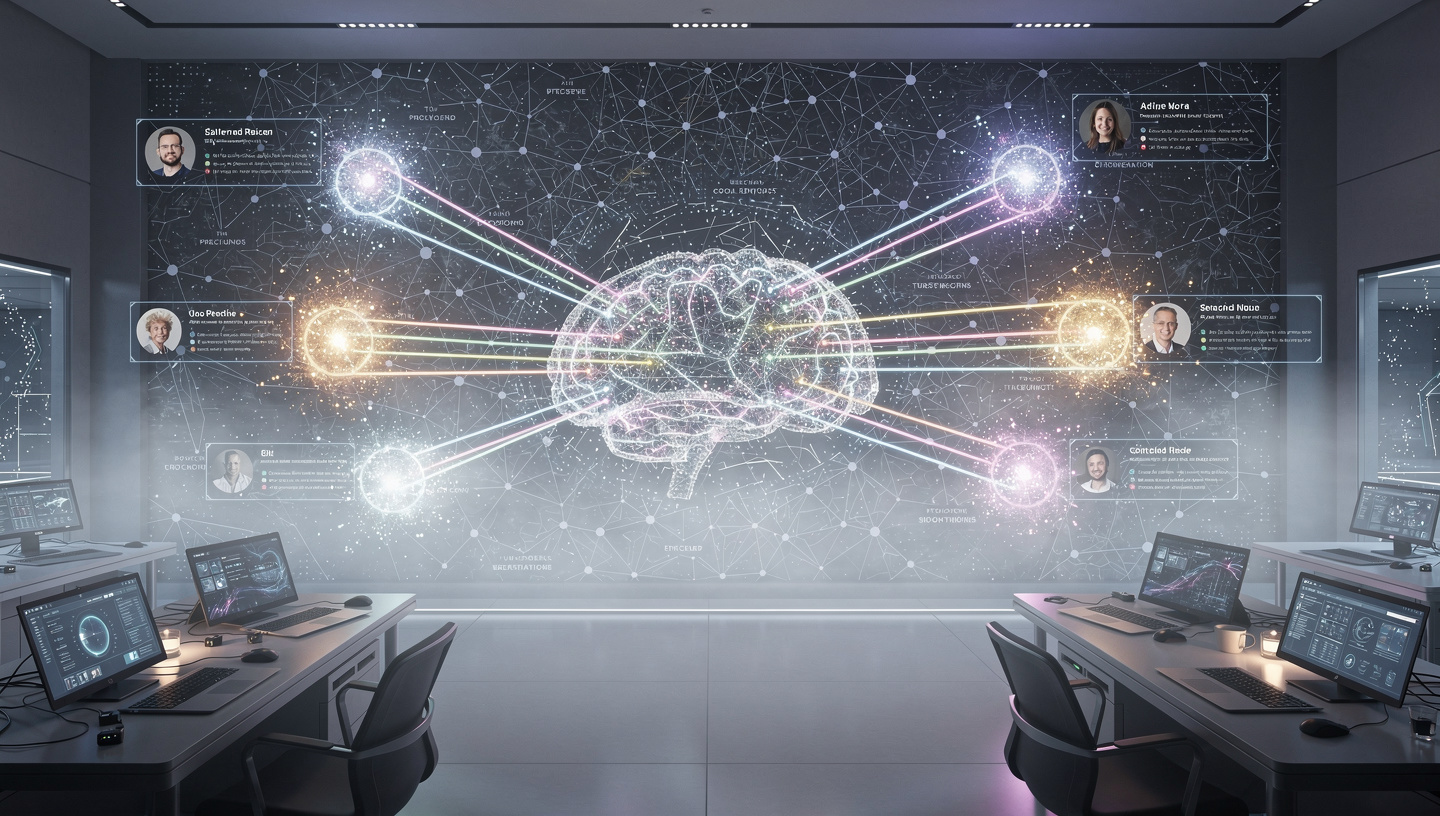
The Bseech Cognition Dataset (BCD) is more valuable than any corpus of text. It is a record of cause and effect in human collaboration. It shows not just that a project succeeded, but which specific sequence of communications, team structures, and milestone adjustments led to that success. An AI trained on the BCD doesn't just learn to mimic human speech, it learns to orchestrate human success. It can answer: "For a hardware startup facing a supply chain shock, what is the optimal 3-person Human Archipelago to assemble, and what communication protocol has the highest historical success rate for this crisis?" This turns AI from a content generator into a Master Orchestrator, its recommendations grounded in empirical reality, not statistical guesswork.
The Digital Shaman as AI-Human Translator
This creates a new, essential role for the Digital Shaman: AI-Human Relationship Manager. When an AI's orchestration attempt fails, when its perfectly logical team suggestion is rejected by human intuition, or when a contract it drafts misses a crucial cultural nuance, the Shaman steps in. They translate the AI's logic for the humans ("It suggested this team because their combined skill vectors have solved 7 similar problems") and the humans ambiguity for the AI ("The client says they want someone 'gung-ho,' which in this context means proactive but risk-aware, not reckless"). The Shaman ensures the AI learns from these failures, refining its model of human reality.
AI as a Node in the Trust Graph
Ultimately, advanced AI agents will themselves become nodes on the Trust Graph. An "AI Legal Reviewer" agent, after successfully reviewing 10,000 contracts with zero missed clauses, will develop a verified competence score. A human user will be able to retain this AI agent, just as they would a human lawyer, for specific, well-scoped tasks. The network becomes a hybrid human-machine capability graph, where value is assigned based on verified outcomes, not on the biology of the provider.
The prophecy is clear: the most powerful entity in the 21st century will not be the company with the best AI model. It will be the entity with the best human curation layer for that model. Bseech provides the trust infrastructure, the real-world sensors, and the execution pathways that allow artificial intelligence to escape its digital confinement and actually do things in our complex, human world. We are not building the future of work. We are building the nervous system for the coming AI age, ensuring it serves humanity by connecting it, seamlessly and trustworthily, to humanity itself.


Be the first to leave a comment.